
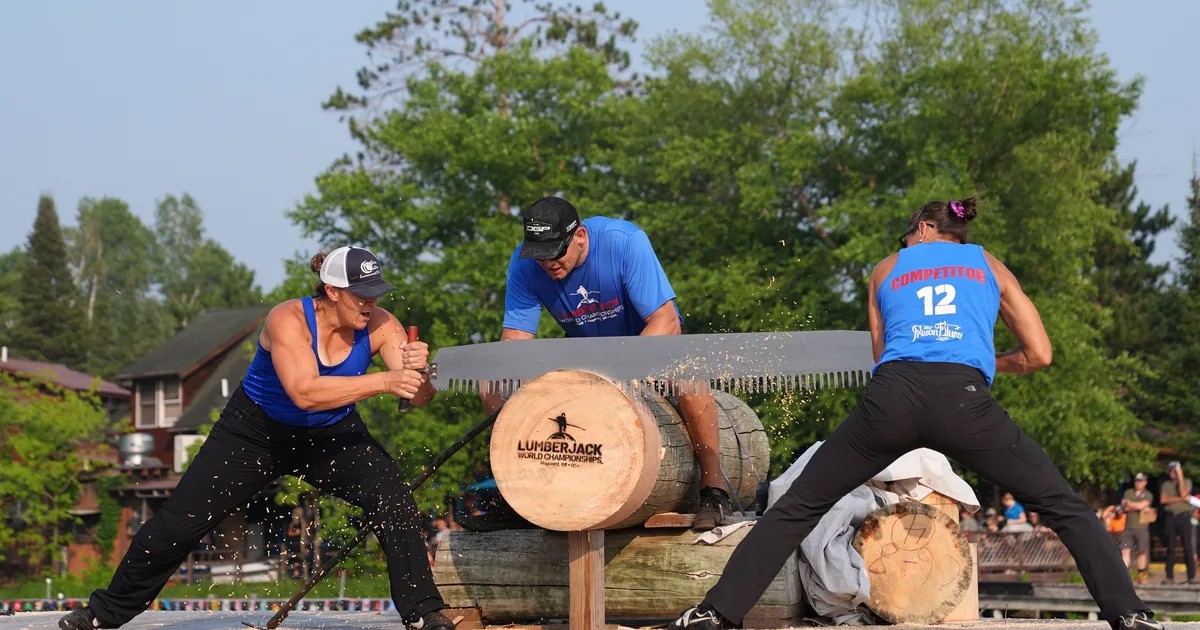
The air in Hayward, Wisconsin, smells like pine sawdust and adrenaline. It’s loud. It is chaotic. There are cheers of “Yo-Ho!” echoing off the trees. And for the third time in recent history, women are rewriting the rules at the Lumberjack World Championships.
This isn’t just about muscle. It’s about precision, speed, and gear that costs a fortune.
Thirty-three new world records have been set across various divisions this year. But the spotlight is firmly on three women who shattered benchmarks that had stood for years. The competition, held in the Lumberjack Bowl by Lake Hayward, drew 66 men and 40 female competitors. They traveled from nine countries and 16 states. Some came just to watch. Others came to dominate.
The Speed of the Axe
Karolina Urbanová from the Czech Republic didn’t just participate; she performed surgery on white pine trees with an axe. She took home two new women’s world records.
First, she conquered the Women’s Underhand Chop. The task: slice through 11 inches (28 centimeters) of wood. Urbanová did it in 21.28 seconds fast enough to make a casual observer dizzy.
Then, she moved to the Standing Chop. The tree was thicker, a 9-inch (23 centimeter) round. She cleaved through it in 19.38. Two golds. Two records. One weekend.
The tools they use are not standard hardware store purchases. Competitors bring custom-built chain saws. They carry carefully sharpened axes. A single buck saw can cost over $400 just to have the teeth sharpened correctly. If you don’t have the money, you don’t have a shot.
“The culture of it I think is really wonderful… I don’t know any other sports where athletes support each other like we do.”
— Kate Witkowski
Balancing on Water
Not everything happens on solid ground. Meredith Ingbretson, a local from Hayward, proved that balance is a muscle you can train. She set the world record for the Women’s Boom Run.
The event looks like a nightmare for anyone who has fallen off a skateboard. Athletes must sprint across a series of floating red cedar logs and back. Eight logs. Water on all sides. Slippery. Unforgiving.
Ingbertson crossed the water in 13.78. Seconds matter here. Fractions of seconds matter more. One misstep means a cold plunge into Lake Hayward. Most prefer staying dry.
From Logrolling to 20+ Events
Women have been part of this circus since the first championship in 1960. But the game has changed. Originally, the only event available was logrolling. Simple. Restricted.
Now, female competitors can enter more than 20 timber sports. The scope has expanded dramatically. Why did it take so long? Because the sport was deeply rooted in tradition. And tradition is slow to change.
Nancy Zalewski knows this well. She has competed for 27 years. She has trained others. Including Kate Witkowski. When Zalewski started chopping, she chopped alongside men. No separate categories. Just raw competition. That grit remains part of the DNA today.
The Niche Appeal
You can see the culture in the crowd. Kids wear lumberjack socks. Flannel is mandatory. Suspenders are everywhere. Brands hand out blow-up axes and plastic saws to the next generation. Outside the bowl, there is wood-carving. Live music. Food trucks. Axe-throwing games.
It’s a spectacle. But inside the bowl, it’s serious business.
Witkowski put her finger on the difference. In most sports, rivals are enemies. In lumberjack sports, rivals are neighbors. The gear is hard to find. The events are niche. Everyone is trying to get better. Why tear each other down?
The tradition began in the 1890. This was once a holding pond for log drives on the Namekagon River. Now it holds memories. And records.
The championships end. The saws are put away. The records stand for a year. Then someone tries to break them again.
That’s the point, isn’t it?