
There it sits. An 18-euro bottle of extra virgin olive oil resting on the counter next to the stove. It looks like a standard kitchen tableau in millions of French homes. Harmless, right? It’s actually a chemical disaster waiting to happen.
The problem isn’t the oil itself. It’s the spot you’ve chosen for it. Every time you leave that bottle on a sun-drenched countertop or forget to screw the cap back on tight, you accelerate a series of chemical reactions. These reactions degrade the flavor, destroy the aroma, and obliterate the antioxidants that give high-quality extra virgin olive oil its reputation.
The math is brutal. A study from the University of Bari estimates that within just three months of being stored near the stove or on an open shelf, the concentration of polyphenols drops by about 50%. That is not a slight degradation. That is a halving of value.
What You Are Actually Paying For
When you buy quality extra virgin olive oil, you are paying for an exceptional concentration of phenolic compounds. Olive oil contains roughly thirty different polyphenol structures, each with distinct and complementary properties. The most specific ones include tyrosol, hydroxytyrosol, oleuropein (which promotes bitterness), and oleocanthal (which gives that spicy kick).
The level of bitterness is directly proportional to the polyphenol content. It serves as a taste indicator. That slight burn at the back of the throat? That slight bite when you swallow good Tuscan or Greek oil? It is not a defect. It is the chemical signature of richness.
These phenolic compounds improve the oxidative stability of the oil. They slow down natural rancidity and extend shelf life. Polyphenols protect the oil. And they protect you, too.
Common oils typically hold polyphenol levels between 150 and 200 mg per liter. Sometimes less. High-quality products range from 400 to 800 mg per liter. When you pay a premium for a good bottle, you are buying that gap. Wasting it by storing the oil in the wrong place means flushing half your investment down the sink.
The Countertop Is the Worst Place to Store Olive Oil
Light, oxygen, heat, and time attack oil through oxidation. This process degrades polyphenols and free fatty acids—essential elements of quality. These three factors act simultaneously and irreversibly. Once a polyphenol is oxidized, no manipulation can regenerate it.
The edge of the stove combines all these dangers. Heat degrades aromas, encourages rancidity, and increases free fatty acids. An open shelf facing a window is hardly better. Exposure to light causes substantial loss of antioxidants, particularly tocopherols, and accelerates rancidity compared to oil stored in the dark.
The International Olive Council advises against storing oil on upper shelves or near light sources. It recommends limiting exposure to negative factors like light, high temperatures, and oxygen to reduce oxidation speed. An official recommendation. Ignored by almost every French kitchen.
When storage conditions are inappropriate, extra virgin olive oil can be downgraded to a lower commercial quality category. Chemically speaking, what was once extra virgin becomes mere virgin oil.
The Transparent Bottle Problem
Consider the transparent glass bottle. Often sold as an aesthetic feature, it worsens the problem. Metal cans block light, which is the primary cause of premature oxidation. Dark bottles protect the contents from UV rays that harm oil quality.
A beautiful clear bottle on your countertop is an oxidation accelerator disguised as a decorative object.
Your 18-euro bottle loses half its value in three months if stored incorrectly. Light, heat, and oxygen are the three chemical enemies of olive oil. The Italians keep a simple secret that almost no French kitchen practices.
Why Does Oxidation Happen So Fast?
Oxidation is not a slow, passive process. It is an active chemical breakdown. Heat provides the energy. Light acts as a catalyst. Oxygen is the reactant. Together, they strip the oil of its protective compounds.
Polyphenols are fragile. They react quickly to environmental stressors. Once they are gone, the oil becomes vulnerable to further degradation. The taste changes. The health benefits disappear. The investment is wasted.
Where do you store your oil instead? Not on the counter. Not near the stove. Not in a clear bottle. The answer lies in darkness, cool temperatures, and airtight seals. But that requires a change in habit. A small shift. One that saves money. And preserves quality.
Is it worth the effort? Or is the convenience of having oil within reach worth the loss of half its value? The science suggests otherwise. But habits are hard to break.
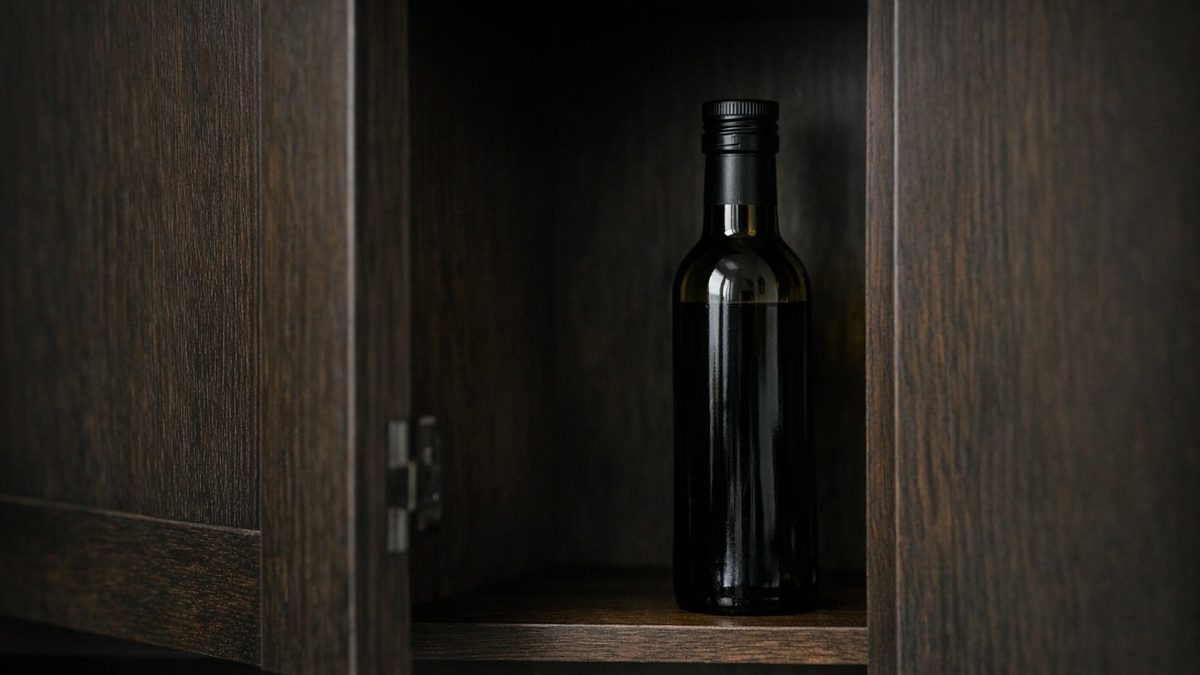
The Italians keep their oil in dark cabinets. Away from heat. Away from light. They treat it with respect. Not as a decorative prop. But as a living product.
What happens when you finally move that bottle? The flavor returns. The health benefits remain. The value is preserved. Or does it? You might find that once you know the truth, you can’t unsee the waste.
Stop letting your olive oil go rancid: The Italian storage rule
It’s not just tradition. It’s chemistry.
In Italian kitchens where olive oil is actually produced, you won’t find a shiny bottle sitting on the counter next to the stove. You won’t see it collecting dust near the window, either. It’s tucked away. In a closed cabinet. In the dark. Away from heat.
The temperature hovers around 16-18°C. Not 25°C. Not room temperature in a sunny apartment.
Most of us make the same mistake. We buy expensive extra virgin olive oil, pour it into a clear glass bottle, and leave it on the countertop. We think we’re being stylish. We’re actually degrading the product.
The International Olive Council is clear on this. They recommend keeping oil between 13 and 25°C. For your home? Aim for that 14-18°C sweet spot. Dark. Cool. Still.
A basement is perfect if you have one. Treat a large jug like a fine wine. If you live in a city apartment without a cellar, a high cupboard is your next best bet. Just keep it far from the oven. Far from the dishwasher. Far from any window that gets direct sunlight.
And please, check the smell of your storage spot.
Olive oil is absorbent. It smells everything. If you store it next to strong spices, garlic powder, or even cleaning supplies, it will absorb those aromas. Even in a sealed bottle. It’s porous. It’s hungry.
Your cabinet should be bland. Quiet. Dark.
Choose the right vessel
Glass is good. Dark glass is better.
But stainless steel? That’s the gold standard. Tin cans are excellent too. They block out 100% of light and air.
Plastic? Avoid it.
Over time, plastic can leach chemicals into the oil. It’s not just about preserving flavor. It’s about not eating toxins. If your oil came in a plastic jug, decant it immediately into a dark glass or metal container.
The timeline matters more than you think
Let’s talk about expiration.
That date on the bottle is a “best by” date. It assumes you’ve stored the oil correctly. If you’ve been leaving it on the counter, that date means nothing.
Once opened, keep it in a sealed container. Away from light. At a stable, cool temperature. You have seven to eight weeks to use it at its peak quality.
But you have a wider window if you’re strict. An unopened bottle, stored correctly, lasts 18 to 24 months from bottling. After opening? Try to finish it within six months.
Anything past that isn’t just losing flavor. It’s losing health benefits. It’s starting to turn.
Polyphenols are your best friend
Here’s a detail most people miss.
The more polyphenols an oil has, the longer it lasts.
Polyphenols are natural antioxidants. They protect the oil from oxidation. Oxidation is what makes oil go rancid. It turns bitter. It loses its bright, fruity notes.
A high-quality oil with a high polyphenol count is more stable. It resists spoilage better than a cheap oil, even if both are stored perfectly.
This means your purchase decision is only half the battle. Your storage habits are the other half.
If you buy a cheap oil, it will degrade faster. Period. No amount of careful storage can fully compensate for low polyphenol content. But if you buy a good oil, you need to protect it. Store it right. Use it within months.
Because at the end of the day, you’re not just buying fat. You’re buying flavor. You’re buying health. And if you let it sit in the sun, you’re throwing that money away.
So, where is your oil right now?
Under the sink? On the counter?
Move it.
Sources : terracenturia.com | ocl-journal.org