It’s everywhere right now. You see it in the shop windows. You spot it in your Instagram carousel. It shows up on dinner party guests and office outfits alike. One specific dress style keeps coming back, and it has a secret weapon. There is a small detail at the waist that creates the illusion of a flatter stomach. No belt. No tight shapewear. Just effort.
Is this just another fleeting fashion trend? Or is there actual tailoring science behind it?
Spoiler alert: it is a real construction technique. And it arrives at the perfect time. Spring is here. We want looks that are crisp and light. We don’t always want them tight. This dress delivers on both fronts.
The Optical Illusion That Actually Works
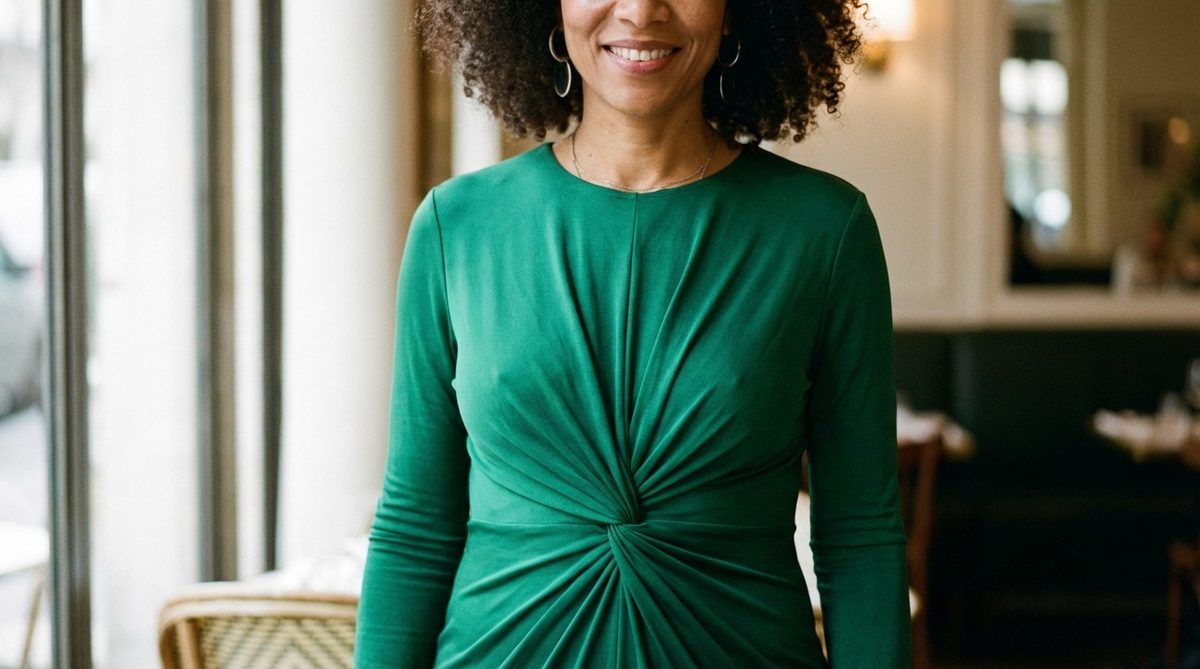
The twisted knot detail draws the eye
Many people assume length or neckline do the heavy lifting. They don’t. The difference lies in the twist. It is a twisted fabric detail. Sometimes it looks like a bow. It sits right in the center of the waist.
Visually, you see a pinch point. The fabric drapes differently there. It creates a sensation of being pulled in. It looks like the material was gathered exactly where needed.
The result is subtle but powerful. Your eye is drawn to that central point. The silhouette looks more defined. This works even if the rest of the dress is very simple. It is discreet. That is exactly why it changes everything.
Why the internet loves a structured-but-comfortable fit
The reason this dress dominates social feeds is simple. It hits the most searched aesthetic of the moment. People want pieces that shape the body without constraining it.
Product descriptions make this promise clear. They use terms like “waist definition.” They promise a “smoothed tummy.” They offer a “sculpting effect.” All of this without adding accessories.
We buy with our eyes. A cut that looks good on a flat lay or a photo has an obvious advantage. You want a clean silhouette right away. You do not want to spend an hour styling it with belts and layers just to make it work.
1970s nostalgia, updated for today
This knot, drape, and twist idea didn’t appear out of thin air. It borrows from the Seventies. Back then, designers worked with fabric to flatter the line. They didn’t try to compress it.
Today’s spring version is different. The volumes are cleaner. The finishes are minimalist. The materials move with you rather than against you.
The intention feels retro. The execution feels incredibly modern. It is a “fashion” dress that you can actually wear every day.
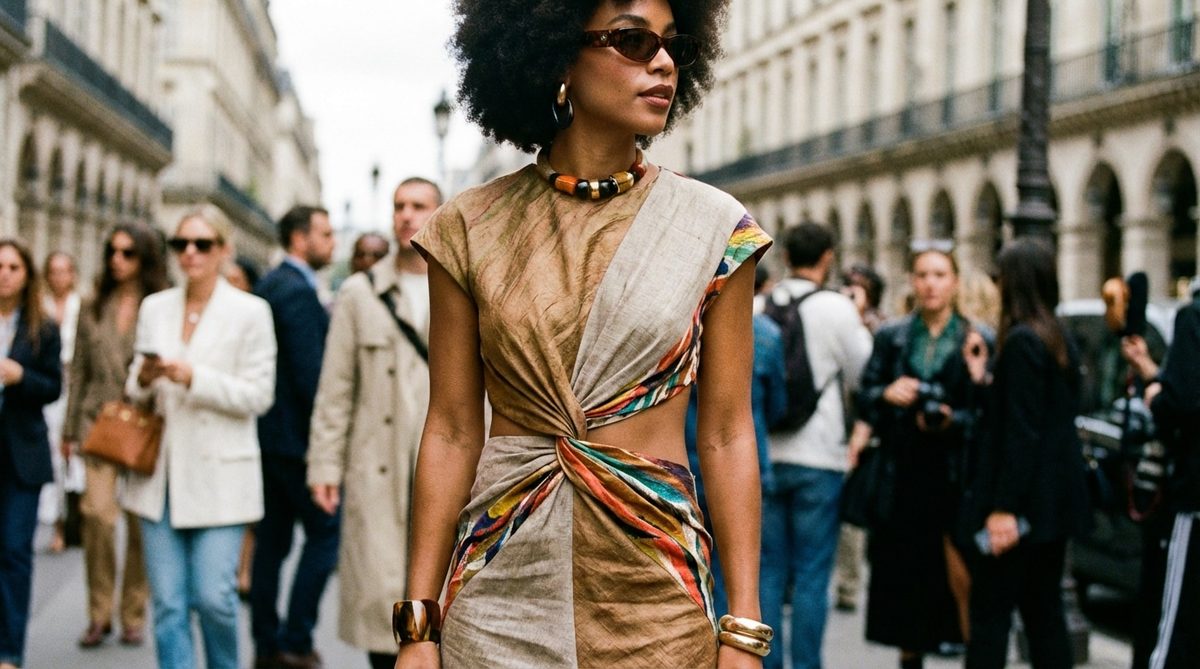
How the Twist Cut creates the optical illusion of a smaller waist
The twist is not just a design detail. It acts as a focal point. Instead of letting your eye scan a flat, uniform surface—where every little tension becomes visible—a cut draws attention to a specific point. The fabric gathers there and creates relief. The area looks held in, even if it isn’t.
It’s a visual construction trick. The dress looks cinched without being rigidly so. That’s why it’s suitable for long days, big meals or travel. It’s real life, not a mannequin stand.
What the effect actually does: smoothing the tummy, defines the waist
Draping doesn’t erase your shape. It smooths it. The cycle replaces unwanted, unsightly wrinkles with intentional, targeted wrinkles. A controlled pleat hides fabric that clings. A braid distracts from a straight, unforgiving seam.
The waist reads better. Even if you don’t have a sharply defined waist, your eye knows where it is. That’s the secret. The illusion becomes a practical hack.
Why you don’t need a belt or additional restraints
Belts can cut into your silhouette, add volume or ride up in the afternoon. This dress has the idea of ”snatched” without adding layers. You avoid the “I squeezed myself in” vibe.
The twist also bypasses strict darts and seams. The waist is suggested, not forced. It’s more comfortable, especially in the spring when you want light, breathable fabrics.
Positioning is everything: hitting the right centimeter for maximum impact
The difference is in the placement. A twisted cut works best when it’s 1 to 2 cm above your natural waist for a believable slim waist look. This small change lengthens the lower torso. This creates a longer, leaner line.
It’s subtle. But this is exactly why the dress looks well-tailored, even without heels or jewelry.
Too high, too low: mistakes that ruin the effect
If the twist is too high, it can visually raise the waist and squash the torso, especially when the fuller bust. If it’s too low, it draws attention to the stomach instead of smoothing it. In both cases, the structuring effect is lost.
As a rule of thumb: stand in front of a mirror. The twist should look like it falls naturally where your body tapers. If you are not sure, check the profile. This view usually shows the most accurate placement.
Details that reinforce the illusion: pleating, folds and tightness
The twist can be subtle or bold. For a sharp look, pay attention to the clear twist point and draping that flows diagonally. Diagonals are a stylistic shortcut: they create movement and visually “cut” volume.
Folds must remain under control. Too much fabric adds width. A well-drawn drape does the opposite. You want structure, not surplus.
Fluid vs. ribbed: Choose the fabric for the desired slimming effect
Fluid fabrics are your allies when you want a “slips over” effect. They move with you. The twist becomes a graphic detail, not an pile-up. In spring, this is suitable for midi dresses, knee-length cuts or updated wrap styles.
Beware: too thin fabrics that show underwear. Ideally, go for something fluid but opaque enough, especially in light colors.
Ribbed fabrics provide a “held” effect without compromising the bond. Ribs create verticality and refer to height. With a well-placed twist, you get a sporty and stylish look that goes well with simple sneakers or thin sandals.
Bonus: The springs are forgiving of small size variations. It adapts to the body without creating uncontrollable wrinkles.
Thickness and Lining : When comfort accentuates your silhouette
A light lining or slightly denser fabric can improve the sculpting effect. It doesn’t weigh; it stabilizes the curtain. This prevents the phrase from wandering and focusing throughout the day.
Sweet spot: comfortable, breathable fabric that holds its shape. You get visual support without feeling restricted.
Twisted waistbands are in fashion, but using them properly isn’t just about following the trend. It’s all about geometry. A front or back knot does the heavy lifting and creates optical illusions that can define your silhouette if you know how to direct the eye.
Here’s how to match this cut to your natural proportions and then wear it without thinking too much about the rest of your outfit.
Balancing a Larger Bust
When you carry more weight on your chest, the goal is balance. A massive, big twist just above the sternum can add unnecessary bulk to the middle of your body. You want balance and not focus on bust.
Choose a twist that sits more evenly against the body. Look for a twist waist dress where the knot represents a subtle drape rather than a big bow or heavy ruching. Pair this with a breathable neckline. A square neckline or a subtle V-neckline works wonders as it breaks up the vertical line of the bust. Avoid busy cache cœur styles; You can make the top look even heavier.
Structure helps. Short, structured sleeves or a clear shoulder line draw attention up and out and distribute visual weight away from the center. It’s about guiding the gaze, not about fighting your own anatomy.
Harmonizing Wider Hips
Wider hips? The centered twist is your best friend. By drawing attention to the narrowest part of the body – the waist – you interrupt the visual flow that would otherwise widen the bottom.
Choose a skirt that falls straight or flares slightly from the hips. You want smoothness, not bulk. The midi length is particularly effective here. It elongates the leg line, especially when paired with a short coat in the spring. The vertical line created by the open jacket and cinched waist creates a streamlined column.
The key is to keep the bottom half simple. If the waist is a feature, the hips should form the frame and not the focal point.
Define a straighter waist
Some body types do not have a clearly defined waist. No problem. You can visually create a curve with a twist dress.
A dress with a straight cut, but with a central twist, works as a drawing tool. The fabric is gathered to mimic a fitted waist without a belt or dart. This is helpful because it avoids the stiffness of a tight band that can sometimes dig in or cause bulges.
Instead, you get a soft definition. A straight dress with a subtle twist often looks more modern and relaxed than a fitted sheath dress. It’s a neat trick to create an hourglass illusion without any customization.
Day styling: effortless and structured
When running errands or going to the office, a twist dress should look grounded. The simplest combination that really works? Flat shoes and a short jacket.
A jacket that hits the waist – think a denim jacket, a light blazer or a moto style – frames the look. It strengthens the narrowest part of the upper body. If the jacket is too long, it can completely cover the twist, defeating the purpose.
Keep your shoes clean. Modern ballet flats, stylish loafers or minimalist sneakers are enough. You don’t need heels to make this dress work during the day. The dress itself provides structure; The shoes just have to complement it.
Styling for the evening: Less is more
Wearing this to dinner or drinks requires restraint. The biggest mistake people make is over-accessorizing. The strength of the twist dress is its architectural cut. Let the dress do the talking.
Stick to minimalism. A pair of thin hoop earrings, a statement ring or a simple clutch will work. If you wear heels, keep them simple. If the fabric is already draped and textured, adding sparkly or bulky shoes creates visual noise. You want the silhouette to remain sharp and legible.
Choose colors and prints
Solid colors are the safest choice to improve the appearance of the waist. Medium and dark tones often deepen the shadows and emphasize the lines created by the twist. However, light colors can also work as long as the fabric is opaque and well lined. You don’t want sheer fabrics that reveal the twists and seams underneath, as this can look messy rather than tailored.
Prints are more difficult. A busy full pattern can dilute the focus. If the twist is a chaotic print, the eye can get lost in the noise. Instead, look for places where the pattern is contained, or use micro-patterns that add interest to the subject without overwhelming the structure. A solid twist on a patterned dress can also anchor the look.
Buying Online: Spotting the Real Thing
Buying this style online requires a discerning eye. They are looking for construction, not just decoration.
Key words that matter:
Search for terms such as twist, knot, cinched waist, draped waist or sculpting. These usually mean a built-in structural element. If the description just says “ruched”, it could be a random pleat that doesn’t create the same waist-cinching effect.
Read the pictures:
Find a clear, defined twist point. A clean center seam or a symmetrical drape indicates that the garment will retain its shape. If the twist looks “mushy” or spreads too far in photos, it probably looks the same on you. Check out the 3/4 angle shots. A good twist dress remains an eye-catcher wherever you stand.
Sizing strategy:
Don’t size down hoping the twist will make you shrink. The twist works best if the dress fits your shoulders and bust properly. Let the waist do the work. If you are between sizes, check the fabric. Ribbed knits often has enough stretch to fit a normal size. Non-stretch woven fabrics require more looseness in the chest and hip areas.
Avoid relying on alterations. If the twist is in the wrong place, the cutter cannot easily move it. The placement is part of the design. First, choose the cut that suits your body.
It’s not about hiding your figure. It’s about highlighting it on purpose. Twist is a tool, and like any tool, it works best in skilled hands.
Twist detail: How to get slimmer without adding bulk
The secret isn’t what you add. It depends on how the fabric is cut. Pay special attention to the central twisted detail. You’ve seen it – the knot effect or the draped fold right down the middle. This isn’t just decoration. It structures the silhouette. It draws the eye directly to the center.
Think of it as a built-in cinch. No belt needed.
It’s a simple customization trick, but executed well, it’s devastatingly effective. The twist replaces the need for a physical accessory. It gives your body a structured shape without cinching in the waist or a tight waistband.
Precise placement: Redefine your waistline
Where you place this twist is important. Much.
If you set it randomly, it will fail. For a flattering result, the cut should be 1-2 cm above the natural waist. That’s the sweet spot.
Why does this placement work? It visually shortens the stomach area. This makes the waistline easier to read. The trick isn’t that the dress magically shrinks your body. It is an optical illusion that shifts the focus to the right place. You get the defined shape without any restrictions.
Fabric and design: comfort meets sharp silhouettes
The material changes the feeling. The logic remains the same.
- Flowing fabrics elongate the frame.
- Ribbed textures provide the structure.
- Lined options provide stability.
The design follows the cut. Keep it simple. A short jacket during the day. Subtle accessories for the evening. Allow the colors to recede so that the twists can play its role.
The result is a sharper silhouette. You don’t feel squeezed. This is exactly the kind of compromise we want in the spring.
We see a mix of 70s heritage and the modern obsession with sculptural cuts. The twisted-cut dress is convincing because it does the job of a belt without looking like one. By focusing on precise placement, suitable fabrics and minimal styling options, you can achieve a visually slimmer waist.
It proves that the best silhouette “hack” is not an accessory. It’s a cut designed for real life. No extra gear. Simply better engineering.