If your floor work feels stale. It is because it probably is. You have mastered the pose, but your body remembers the path too well.
Enter the rubber band. Not for skipping. For fighting back.
It sounds simple, which is exactly the problem people overlook. They want intensity. They think intensity means heavy weights that rattle the floorboards. But Pilates is not about brute force. It is about control.
Bands add resistance without killing that flow. They force you to slow down. You cannot cheat gravity when the band pulls you back with constant, annoying tension.
Weights Versus Rubber
Let’s get one thing straight. Dumbbells are great. If you like lifting heavy things. If you are into traditional strength training.
Pilates is different. It relies on constant tension. With a free weight, the hardest part is usually at the very bottom or the very top. In between? Dead air. Your muscles rest. The weight hangs.
With a band. The resistance is always there. As soon as you start the move. It pushes back. As you stretch out. It pulls harder. This creates a connection from point A to point A. Every single rep.
It also ruins your ability to rush. You might swing through a bicep curl. You can’t do that with a loop on your ankles. The band demands patience. If you move too fast, the tension spikes and you feel stupid. It asks you to stay steady. To pay attention to whether your ribs are flaring or your hips are shifting.
More tension isn’t always better. Clean movement matters more.
And the logistics? Bands win. They weigh nothing. You can throw them in a tote. Dumbbells stay on the rack. Or in the corner, gathering dust while you pretend they aren’t judging you.
The Band Showdown: Long Or Loop?
Online stores are flooded with elastic rubber. Two types dominate the market. Long bands. And loops.
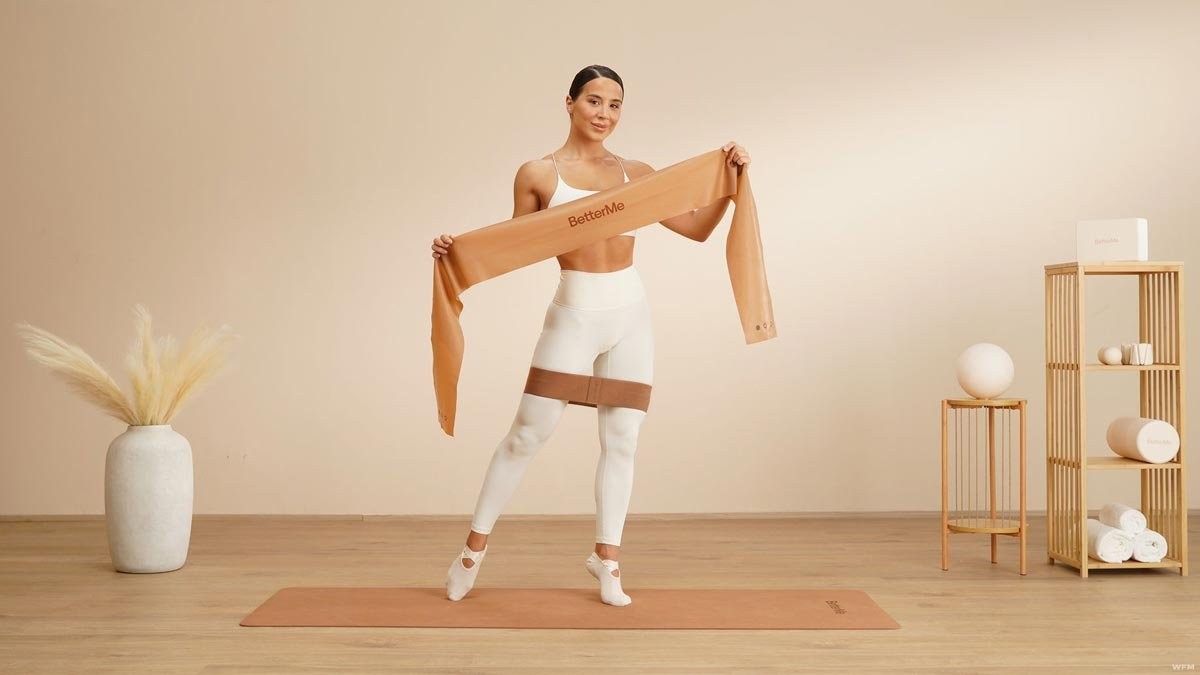
Long bands are open-ended. They are like ropes, if ropes could stretch. They are kings of upper body work. Rows. Overhead presses. Chest opens. You can anchor them under your feet. You can hold them wide. The range of motion is vast. If you want to stretch or work your arms without straining your grip strength, these are the tools.
Loops are circles. Closed loops. No handles. These stay put. Wrap them around your thighs. Or your calves. Or above your knees for glute work. They do not slip easily. They are essential for side steps, bridges, and clamshells. The tension comes from your movement pushing into the band, not just pulling it.
Which one do you need? Both. Obviously. But here is the heuristic:
- Long bands: Arms. Shoulders. Stretching. Big movements.
- Loops: Glutes. Hips. Thighs. Stabilization.
Resistance levels matter. A light band is not weak. It is a test. A heavy band that you cannot control is useless. In fact, it is dangerous. It compromises form.
If you can’t move smoothly. The band is too strong. Lower the level. Or shorten the loop. Adjust your stance. Pilates is about precision. Not ego.
A Full-Body Wake-Up Call
You do not need an hour-long circuit. You do not need to follow an app. Five moves. Slow breathing. Focus on the muscle that is supposed to be working.
Banded Arm Press
Hold a long band at chest height. Hands apart. Press them out wide against the tension. Come back slowly. Keep elbows soft. Keep ribs down. It engages the shoulders while your core braces to stop your spine from arching.
Seated Row
Sit tall. Legs straight. Wrap the long band around your feet. Pull with your hands. Squeeze the shoulder blades. Do not round your back. Imagine someone is pulling your head toward the ceiling with a string. Click. Good.
Dead Bug With Resistance
Lie on your back. Knees in tabletop. Hold a light long band in both hands. Gentle tension. Extend one leg while keeping the other up. Switch. Slowly. If your lower back leaves the floor, stop. Reset. Try a lighter band. The goal is stability, not stretching the spine.
Loop Bridge
Loop above your knees. Lie back. Feet flat. Lift hips. Press your knees outward into the band. Then release. Then lift again. Do not let your knees touch if the band resists them. This isolates the gluteus medius. That hip muscle everyone neglects.
Clamshells
Side-lying. Loop above knees. Bottom foot touches the top ankle. Open the top knee like a shell closing. Keep the pelvis still. If you rock backward, the movement is too hard. Lean forward slightly for leverage.
Eight to twelve reps. Two rounds. That is it. Not because it is easy. Because the burn happens after you leave the room.
Do Not Ruin Your Bands
Bands are fragile. They tear. They snap. It usually happens to the user.
Stop using rough shoes. Or pulling against sharp jewelry. Nails? No. Rings? Off. The latex is sensitive. Micro-tears form. They grow. One day the band whips your ear. You do not want that day to come.
Keep them flat. Twisted bands dig in. They roll. They hurt. Reset the position if it feels uneven. A second spent flattening the band saves ten seconds of adjusting a slipping grip.
And heat. Sunlight. Moisture. The enemies of elasticity. Store them in a drawer. Away from the window. Not tangled in a knot. Unfolded.
Check them before you work. Look for shiny spots. Thinning rubber. White streaks. These are warning signs. Replace them. It costs five dollars. The medical bill for a snapped band injury costs more.
If it hurts. Stop. Pinching? Discomfort? You are doing it wrong. Or the band is too heavy. Reset. Move slower.
The Takeaway
Mat workouts often plateau. You hit the same poses. The same angles. The same mind-numbing routine.
Bands disrupt this. They force you out of autopilot. You cannot think about dinner while you fight a loop on your thighs. You are present. You are aware. You are working.
It is cheap insurance against boredom. And against weakness. You get more control. Better activation. Less clutter in your home.
Start with one long band and one medium loop. Practice the moves. Get comfortable with the resistance. Then see where the tension leads you.