Why do strangers buy breast milk online?
Reddit threads scream with the answer. Buyers say they can’t make enough. They believe it’s better than formula. Donors say official channels are a nightmare.
We evolved to share. One commenter noted. An ancient practice.
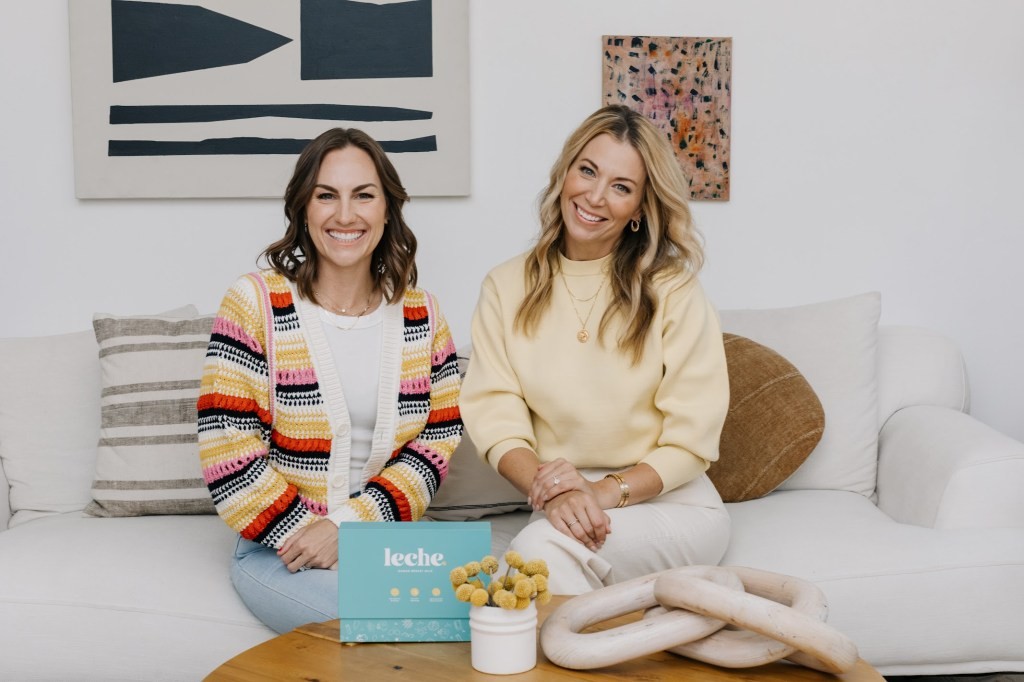
Jenney Korasick and Trish Clifford get it. Best friends. Babies born within a month of each other. Southern California summers. Heatwaves.
Their problem? Too much milk.
Freezers overflowing. Power outages threatened to melt away the supply. Most moms kill themselves trying to get any. These two had liquid gold going to waste. So they gave it away.
Korasick used Craigslist. Pick-up at the curb. Free. Her husband thought she was crazy. People need it. She told him.
But it was sketchy. Back-alley deals for something that intimate. No drug tests. No alcohol checks. No guarantees.
Clifford has a degree in food science. She has a manufacturing background. The question wasn’t should we do this differently. The question was how.
Could we freeze-dry it? Like whey protein. Like cow’s milk powder.
They tinkered. It worked. Powder lasts forever. Three years, shelf-stable.
Enter Leche.
It’s not just a dehydrator service. That’s what they started with. Moms who travel. Moms without freezer space. Now? A whole new layer. A donor platform called Milkdrop.
Official milk banks exist. Yes. But qualifying is hard. Rules are strict. Access is limited.
Leche is the bridge. Vetted donors. Paid donors. This changes things.
Mothers are not inventory. The founders wrote on Facebook. Mothers are infrastructure.
Think about that.
For decades, donor milk systems treated women like pipes. Input. Output. Leche wants to center the woman. The experience matters. The support matters.
Clifford remembers the emotional hit. The realization. There are two sides to this. The giver feels powerful. The receiver feels seen. We are in this together.
Reviews prove it works. A grandmother feeding a grandkid during babysitting. A breast-cancer survivor refusing formula. A family vacationing without the cold chain logistics.
Leah Heck. A nurse. Mom of three. She talked about the grief. The specific, heavy kind of sadness that comes with wanting to nurse but not being able to. Nobody discusses that grief enough.
She chose Leche over formula. A third option. An avenue of support.
Surrogate mothers face the same dilemma. Willing to pump. No fridge to bring it home to. Transcontinental shipping of human fluid is a nightmare.
How do you transport breast milk?
Where do you store it?
Korasick knows the vulnerability. These women are tired. Broken maybe. Hungry. Exhausted.
Compensate the donor. It’s radical. Or maybe it’s just fair. If you stayed up at 2 am. If you pumped until your hands cramped. You deserve appreciation. Financial appreciation.
The science backs it up too.
Microbiome. Brain health. Immune boost. Fewer ear infections. It doesn’t take a full diet to get the benefits. Just a little. A sprinkle.
Leche partnered with Tiny Health for a new clinical study.
Formula-fed babies. Just 100 of them. Adding small doses of donor milk. Tracking gut health over a month.
Is it necessary to go 100 percent breast milk?
Probably not. But the idea of “all or nothing” is a myth anyway. A packet every other day? That shifts the balance.
Supplement. Don’t replace. Unless you want to.
The price is high. $59 for three packs. Two ounces each. It’s an investment. For most, it’s a supplement. A top-up. A safety net.
Korasick and Clifford wanted to create options.
They did.