
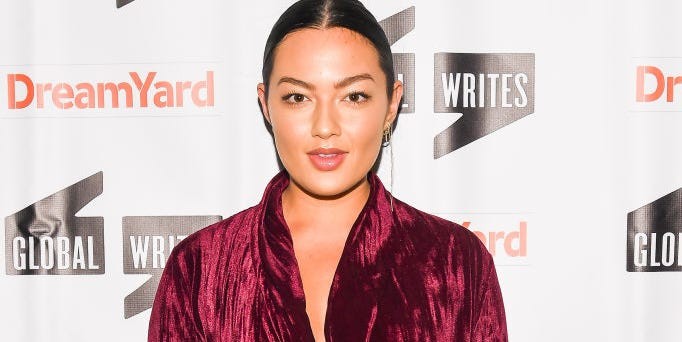
Model, boxer, and body-positivity activist Mia Kang has sparked a vital conversation on social media by sharing a stark “before and after” comparison of her physical and mental transformation. Moving beyond the polished aesthetics typical of the fashion industry, Kang used her platform to detail her journey from the depths of an eating disorder to a place of strength and self-respect.
The Cost of Perfection
In a post shared on Instagram, Kang reflected on her life in 2015, when she was a size 2. The image from that period represented more than just a clothing size; it captured a period of extreme physical and psychological distress.
Kang revealed that during that time, she:
– Had not consumed solid food for 10 days.
– Smoked a pack of cigarettes daily.
– Was obsessed with visible bone structures, such as collarbones and hip bones.
– Suffered from constant anxiety and body dysmorphia, despite being told by the industry that she “never looked better.”
This highlights a systemic issue within the fashion industry, where models are often pressured to maintain unrealistic standards of thinness—sometimes even when they are already at a dangerously low weight—to fit a specific “angelic” archetype.
Embracing Strength and Maturity
Three years later, Kang shared a different reality. Now a size 8, she describes her current state not as a loss of beauty, but as an evolution into womanhood.
“I feel like I finally became a woman. I love my thighs, my curves. I love my strength,” Kang wrote.
Her transformation is not just about weight gain, but about a shift in identity. By incorporating boxing into her life, she has traded the fragility of her past for physical capability and resilience. While she admits to ongoing insecurities, she emphasizes a newfound respect for what her body can do rather than just how it looks.
A Growing Movement of Transparency
Kang’s vulnerability is part of a broader trend of models breaking their silence regarding the mental health toll of the industry. Her story mirrors those of other prominent figures:
* Bridget Malcolm, a Victoria’s Secret model, recently spoke about her long-standing “war” with her body.
* Hunter McGrady shared that her career only truly flourished once she moved away from the starvation tactics she used as a teenager to maintain a size 2.
This transparency is crucial because it challenges the “perfection” narrative that often fuels body dysmorphia in young women and those following social media influencers.
The Reality of Long-term Healing
Crucially, Kang did not frame her recovery as a “happily ever after” fairy tale. She was honest about the fact that an eating disorder is a chronic condition that requires lifelong management.
“Eating disorders and body dysmorphia don’t just disappear,” she noted, “but you can learn how to manage it and heal.”
Her message serves as both a warning and an encouragement: a call to embrace the natural fluctuations of the female body and to prioritize health and happiness over the pursuit of an unattainable, narrow standard of beauty.
Conclusion
Mia Kang’s journey highlights the dangerous intersection of industry standards and mental health, offering a powerful reminder that true wellness involves reclaiming one’s body from the pressures of perfectionism.