
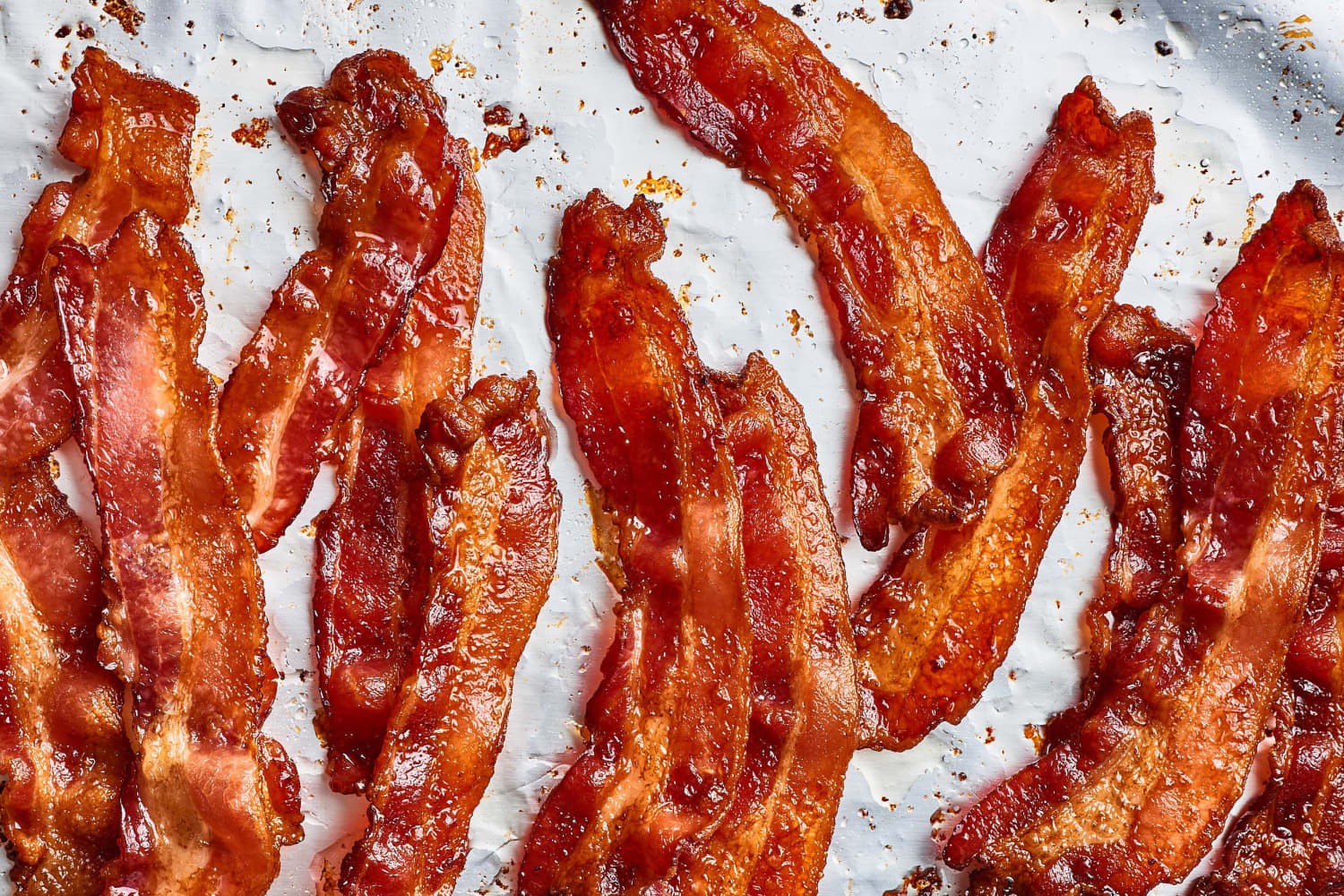
Cooking bacon in a pan can be messy, unpredictable, and prone to uneven results. While many home cooks struggle to find the balance between “limp and chewy” and “burnt and bitter,” professional chefs suggest that the oven is the superior tool for the job. However, the debate remains: should you cook it low and slow, or blast it with high heat?
By analyzing the relationship between fat rendering and sugar caramelization, we can identify the definitive “sweet spot” for the perfect slice.
The Temperature Tug-of-War
To understand the ideal temperature, one must understand the two competing processes happening inside the oven: fat rendering and browning.
- Low Temperatures (325°F–350°F): These temperatures allow the fat to render (melt) slowly and evenly. While this results in very consistent slices, the process is time-consuming and can sometimes leave the meat feeling greasy rather than crispy.
- High Temperatures (400°F and above): High heat triggers rapid browning. However, the risk is high; the sugars found in the meat can burn and turn bitter before the fat has had enough time to fully render, leaving you with bacon that is dark on the outside but tough on the inside.
The Expert Verdict: 375°F
According to culinary experts, 375°F (190°C) is the optimal temperature for most home cooks. It provides enough heat to achieve deep browning and a satisfying crunch without the volatility of higher temperatures.
“I’m a fan of 375°F, which is hot enough to allow for good browning and crisping, but not so hot that the surface sugars found on some bacon burn before the slice crisps.”
— Chris Mattera, Chef at North Country Smokehouse
How to Master the Oven Method
To achieve consistent results, follow this professional workflow:
- Preparation: Preheat your oven to 375°F. Line a rimmed baking sheet with parchment paper or aluminum foil to prevent sticking and simplify cleanup.
- Arrangement: Lay the bacon in a single layer. For optimal airflow and even cooking, leave 1/4 to 1/2 inch of space between slices. Avoid overlapping, as this leads to uneven textures.
- The Bake: Place the tray on the middle rack.
- Thin-cut bacon: Check around the 12-minute mark.
- Thick-cut bacon: Expect a longer cook time of 18 to 22 minutes.
- The Finish: Once the bacon reaches your desired level of golden brown, transfer it immediately to a plate lined with paper towels. This step is crucial to remove excess grease and “lock in” the crispness.
Pro-Tips for Advanced Results
- Prevent Curling: If you prefer perfectly flat strips, use the “pressed method.” Place a second sheet tray on top of the bacon during the cooking process to weigh it down. Chef Kyle Focken of Junebug suggests removing the top tray for the final five minutes if you want an extra-crispy finish.
- Convection Caution: If using a convection oven, set the fan to “low” or “off.” A high-velocity fan can blow parchment paper into the heating elements or cause grease to splatter aggressively throughout the oven.
- Even Heat: If your oven has “hot spots,” rotate the baking sheet halfway through the cooking time to ensure every slice receives uniform heat.
Summary
By maintaining a steady 375°F, you balance the need for fat rendering with the delicate process of sugar caramelization. This method minimizes guesswork, reduces mess, and ensures a consistently crispy, professional-grade result every time.