
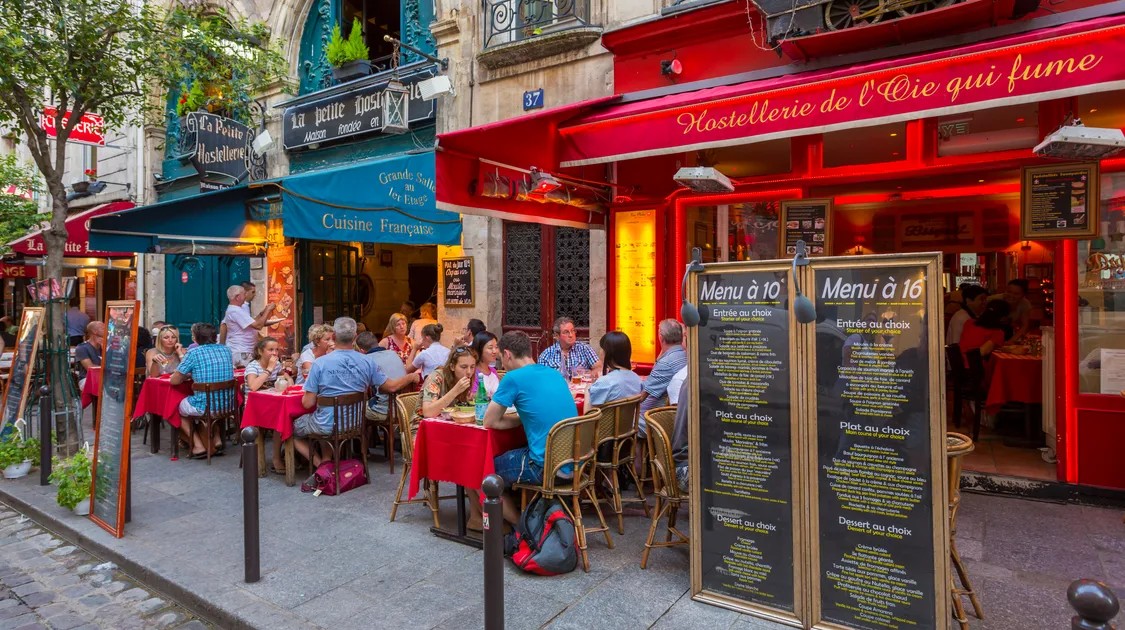
Travelers dream of the marquee meal. The kind that defines a trip.
But with limited hours and zero do-overs, mediocrity isn’t an option.
Expensive food is bad enough. Boring, inauthentic food? Unforgivable.
So how do you spot the fake ones?
The “tourist trap” has a definition, technically.
A study by PhotoAiD points to high prices, tourist-focused amenities, and zero culture.
But that doesn’t help you much on the street corner at 7 PM when you’re starving.
We talked to chefs, PR pros, and travelers.
They have better tells.
A tourist trap is a spot with all the buzz and none of the flavor to back it up. Taryn Scher, “The Sparkle Boss”
Scher notes that even famous, historic spots can fall into this bucket.
You go because “you have to.” You say you were there.
But the food is second-rate.
Chef Hector Santiago agrees, though for him it comes down to intent.
Is the kitchen making what they think Americans want? Or what the city actually offers?
Chef Claudia Martinez sees it as a profit game.
If it isn’t locally owned? If it doesn’t show off local talent?
It’s just flipping tables. High prices, low quality.
Seventy percent of travelers say these places ruin the trip.
Don’t let them ruin yours.
Look for these six red flags.
1. The Loud Welcome
Every single expert warned against the aggressive welcome.
Kitchy décor. Beach bars covered in dollar bills.
It’s too much.
“And most are generally pretty loud,” Scher noted.
In Turkey, Chef Okan Kizilbayir sees hosts running up with menus.
They promise discounts. They shout to pull you in.
Stay away.
Chef Jared Hucks avoids spots on the beaten path.
Specifically those with multi-lingual menus posted out front.
Santiago goes further.
If someone is standing on the sidewalk handing out menus in ten languages?
He walks the other way.
Italian Chef Piero Premoli hates plastic-laminated menus with photos.
Real restaurants don’t need pictures of their food.
Nor do they use checkered tablecloths as a primary design feature.
It’s a shortcut.
2. Proximity Costs
You want convenience.
You’ve walked all day. Your stomach growls.
So you eat at the spot next to the museum.
Mistake.
Rents downtown are massive.
Scher says these spots have to feed tens of thousands a week just to break even.
Large-scale operations.
200-plus seats.
That’s corporate energy.
Martinez actively seeks out roads that are slightly out of the way.
She wants her money to support local cooks.
Not corporations buying pre-made food.
3. Menu Bloat
A large menu is a warning sign.
Kizilbayir hates seeing too many items. Too many styles.
If they are trying to please everyone? They are likely cooking for no one.
Seasonal ingredients? Probably not.
Santiago hates the “throw everything on one plate” approach.
You cannot capture an entire region in one bite.
Shall we ask why the menu lists spaghetti and meatballs as if it is sophisticated cuisine?
Premoli calls these foods “American.”
So is Chicken Parm. Fettuccine Alfredo.
Look at the appetizers.
Excessive fried options mean the food is frozen.
Cheap. Fast.
Premoli watches for repetitive ingredients.
Or frozen food trucks arriving early in the morning.
4. Bland Desserts And Drinks
Everyone wants dessert.
But Martinez, a pastry chef, sees the truth behind the glass case.
Classic cheesecake. Key lime pie. Molten lava cake.
These rarely come from an in-house bakery.
Too perfect? Suspicious.
If the cake slice is uniform every single time? Mass-produced.
Martinez says if the dessert menu lacks descriptions or uses generic garnishes—powdered sugar dust, whipped cream stars, strawberry roses cut into flowers—you’re getting factory food.
Look at the drinks instead.
Scher suggests a “Target Wine Aisle” test.
If the list is generic? Move on.
Look for local beer.
Inventive cocktails show care.
Major beer brands and Appletinis do not.
5. Spectacle Over Substance
Some restaurants are obsessed with photos.
Santiago flags places with explicit photo cues.
More merchandise than food.
He hates the “stupid tableside shows.”
Not the nice tableside cutting of prime rib.
He means lowbrow theatrics designed for social media clout.
“They don’t care about the food,” Santiago says.
They want you to film it. To post it. To advertise for free.
Martinez avoids “Instagram-forward” spots too.
She hates superlatives.
“The Best.” “Amazing.”
Scher warns against websites that claim to be No. 1 in the city.
Where did they earn that?
If they won’t say, they probably haven’t.
6. Who Else Is Eating There?
Look around.
Is it full of tour buses?
Kizilbayir calls it the circle of life.
Tourists visit sights. Get hungry. The bus arrives.
The guide gets a cut of the profit.
The restaurant? It cuts corners.
Bombastic presentation. Sparkly candles on dessert.
Loud music. Servers in weird costumes singing.
Bad food goes into the tourists’ stomachs.
The cycle continues.
Hucks looks for quiet.
He avoids places filled with non-native chatter in a foreign country.
Santiago wants to hear the local language.
He checks Google Maps, too.
Reviews in the local language mean locals are eating there.
Reviews all in English? A red flag.
He looks at photos on social media.
People in shorts and T-shirts dining at a fancy restaurant in Madrid?
He knows he is out of place.
He finds where the locals actually go.
It takes a bit of detective work.
Walking a block further.
Reading a review in Spanish.
Avoiding the shouting waiter.
Worth it for one good meal?