



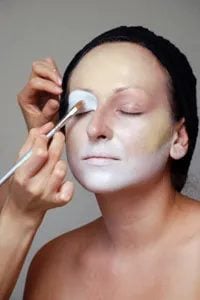
You’ve probably stared in the mirror wondering how models achieve that airbrushed, poreless glow without trying too hard. The answer often isn’t a $200 serum. It’s a makeup primer.
This little-known step is the unsung hero of any makeup bag. It doesn’t just help your foundation last longer. It actively works to fill in fine lines and smooth out texture, creating a canvas that makes skin look perfect at any age.
Think of your face like a wall before you paint it. You wouldn’t slap bright red paint over a patchy, uneven surface. You’d prime it first. Makeup primer serves the exact same function. It treats natural imperfections, color challenges, and uneven texture before you even pick up a brush.
The Real Benefits of Using Primer
“Melt-proof” is the buzzword you see on every tube. But the benefits go far beyond preventing your makeup from sliding off your nose in July humidity.
Primer prevents unsightly creases in eye shadow and streaks in foundation while controlling shine and stopping flakes.
When you apply a layer of priming gel, you are building a barrier. This barrier stops foundation from sinking into pores or settling into creases. It controls oil throughout the day. It stops eyeshadow from creasing in the fold.
Many primers contain specific minerals for extra benefits. Silica, or silicone dioxide, is common in these formulas. It absorbs excess oil and reduces shine instantly. Other primers rely on waxes and polymers. These ingredients create a stronger bond between your skin and your makeup, keeping it locked in place from 9 AM to 5 PM.
Some advanced formulas even include skincare ingredients. You might find retinyl palmitate to reduce flaking, or tocopheryl acetate for antioxidant protection. These small additions help even out skin tone and decrease breakouts over time.
Choosing The Right Type For Your Skin
There is no single “best” primer. The market is flooded with options, and picking the wrong one can make your makeup look worse, not better.
Selecting a primer is no different from selecting a foundation. You need to match it to your skin type and tone.
- Dry skin: Look for hydrating primers with moisturizing properties. These add moisture where your foundation might otherwise cling to dry patches.
- Oily skin: Opt for oil-reducing or mattifying formulas. These control shine and prevent the “greasy” look by midday.
- Color correction: Tinted primers can save you time. If you have redness or dark spots, a green or peach-tinted primer can neutralize issues before foundation.
You can also target specific areas. Eye primers keep shadow in place and prevent creasing. Lip primers stop lipstick from feathering or smearing. Full-face primers are usually translucent or tinted to match your natural tone.
Is An All-In-One Primer Worth It?
Marketing loves to promise everything in one bottle. Wrinkles? Gone. Acne? Prevented. Sun protection? Included.
Before you buy that $40 “miracle” bottle, check the ingredients. Most primers are made of water, preservatives, and silicone-based ingredients.
- Cyclomethicone: A silicone grease reducer. It helps the product spread smoothly.
- Dimethicone crosspolymer: A skin protectant. It forms the barrier that locks makeup in place.
- Retinyl palmitate: Helps reduce flaking and restore suppleness.
- Propylene glycol: Acts as a moisturizer.
While these ingredients are effective for immediate smoothing, they rarely replace dedicated treatments for wrinkles or acne. An all-in-one product is convenient, but it might not deliver on every front.
Application And Safety Tips
Adding another step to your morning routine feels daunting. But think of it this way: it takes about the same amount of time to apply primer as it does to brush your teeth and floss.
Use the same technique you’d use for moisturizer. Dab a small amount on your cheeks, eyes, and lips. For areas where your color tends to fade or separate, add a little extra. This simple tweak can eliminate the need for powder touch-ups or blotting sessions later in the day.
Safety matters. Since primer sits directly on your skin before other products, irritation is possible. Always read labels. Test new products on a small area first. Signs of irritation include redness, puffiness, and dryness.
If you have sensitive skin around your eyes, use a specialized eye primer. Avoid getting standard facial primer too close to the lash line unless it’s explicitly labeled as safe for eyes.
The Verdict
Primer isn’t just filler. It’s a functional tool. It minimizes fine lines, temporarily masks dark spots, and sets the stage for coverage that lasts.
The results are worth the few extra minutes. You get smoother application. You get longer wear. You get a look that holds up through long days and humid summers.
Once you find the right formula for your skin, you might realize you don’t need as much foundation. Or any at all. Tinted primers can provide enough coverage to skip the base entirely, letting you finish with just powder.
It’s a small change. But for many women, it’s the difference between makeup that looks good for an hour and makeup that looks good all day.
Primers That Actually Stay Put
Your eye makeup shouldn’t look like a clown’s work in progress. Primer stops that. It holds everything together when the day gets long and hot. Start with a clean face. Pat it dry. Do not rub.
Rub moisturizer in outward strokes. Use a sponge. Wait at least three minutes. That wait matters. Then apply a thin layer of primer.
The Right Way to Apply
Use the same technique for primer as you do for moisturizer. Put a small amount on the back of your hand. Dab a makeup sponge into the gel. Sweep it across your face.
Wait a few minutes. Let the gel sink in. Then add your next layer. Some women skip foundation entirely. They go straight to finishing powder after primer. It works.
Try mixing eyelid primer with eye shadow. The color lasts longer. It stays put.
Target Problem Areas
Where does makeup feather? Crease? Fade fast? Wrinkles around the eyes. Lines around the mouth. Add more primer there. Use your fingertips. Skip the sponge in those spots. The warmth of your fingers helps it blend.
Breakouts? Uneven texture? Exfoliate weekly. Pick the right primer for your complexion. The result looks flawless. Primer can minimize the look of large pores too. It smooths everything out.
Why It’s Worth the Extra Step
Add primer to your makeup bag. It improves fine lines. It provides long-lasting coverage. It works for all skin types.
If your complexion looks dull, try a Pepto Bismol facial mask. It brings a glow back to your face. Want plumper lips? Apply a little cinnamon to your pout. It improves circulation. The effect is temporary. But it works.


