The culprit isn’t you. It’s not your watering technique or that dusty windowsill in the hallway. It’s the soil plug.
Every basil plant you pick up at the supermarket hides a structural problem that no one bothers to explain. You buy it. It looks lush. You bring it home. It turns brown in four days.
The real issue? These plants are engineered for immediate visual appeal, not longevity. They are designed to die in your kitchen.
The “Death by Crowding” Design
Walk into any grocery store and look at those little plastic pots. Inside a volume barely larger than a wine glass, twenty to thirty young basil plants are shoved together. They are prisoners of poor, compressed soil.
This isn’t a production accident. It’s a business model.
This ultra-dense packaging is optimized for the store shelf, not your kitchen counter. The effect is seductive. It looks like abundance. It suggests value. But behind that attractive foliage, the reality is brutal.
Each stem fights for a sliver of light and a square centimeter of root space. This internal competition dooms the plant almost immediately. These seedlings are forced to grow fast using heavy fertilizers. They are packed into pots far too small for their needs. The result is a plant that looks perfect but is physiologically exhausted. It has zero reserves left to sustain itself.
The environmental shock seals the deal. Before it even reaches your countertop, supermarket basil suffers triple stress. It moves from a bright, controlled greenhouse to a dim store aisle. Then it hits your kitchen, which might be dark or overheated. This abrupt change finishes what root overcrowding started.
Why Watering Won’t Fix It
When leaves turn yellow or black within days, the problem is rarely a one-time watering mistake. It is the combination of a suffocated root system and impossible acclimatization.
Even if you water “correctly,” you are just keeping twenty-five plants alive that are fighting for the resources of one. It is mathematical. You cannot win this battle with water alone.
Growers use artificial conditions to accelerate growth: rich fertilizers, intense watering, high density. The basil becomes fragile. Stressed. Without a robust root system to survive once it arrives at your house. All that energy expended in the greenhouse didn’t build a strong plant. It built the appearance of a strong plant.
The One Move That Doubles Its Lifespan
A nursery worker facing a supermarket basil plant does one instinctive thing: they turn the pot over to inspect the roots.
This counter-intuitive reflex reveals the scale of the problem. The solution flows directly from that diagnosis.
You must divide the contents of that single pot into three or four separate pots on the day you buy it.
This is the forgotten step that multiplies the lifespan by five.
Here is how you actually save the plant. Repot small groups of seedlings into three or four well-draining pots. Add fresh soil. Place them near a sunny window.
Concretely: place one to three stems in each ten-centimeter container with drainage holes. Add clay pebbles or gravel to the bottom. Top with aerated soil enriched with a bit of compost. The space changes everything. The roots breathe. The stems straighten. Growth resumes.
How to Dividend Without Killing It
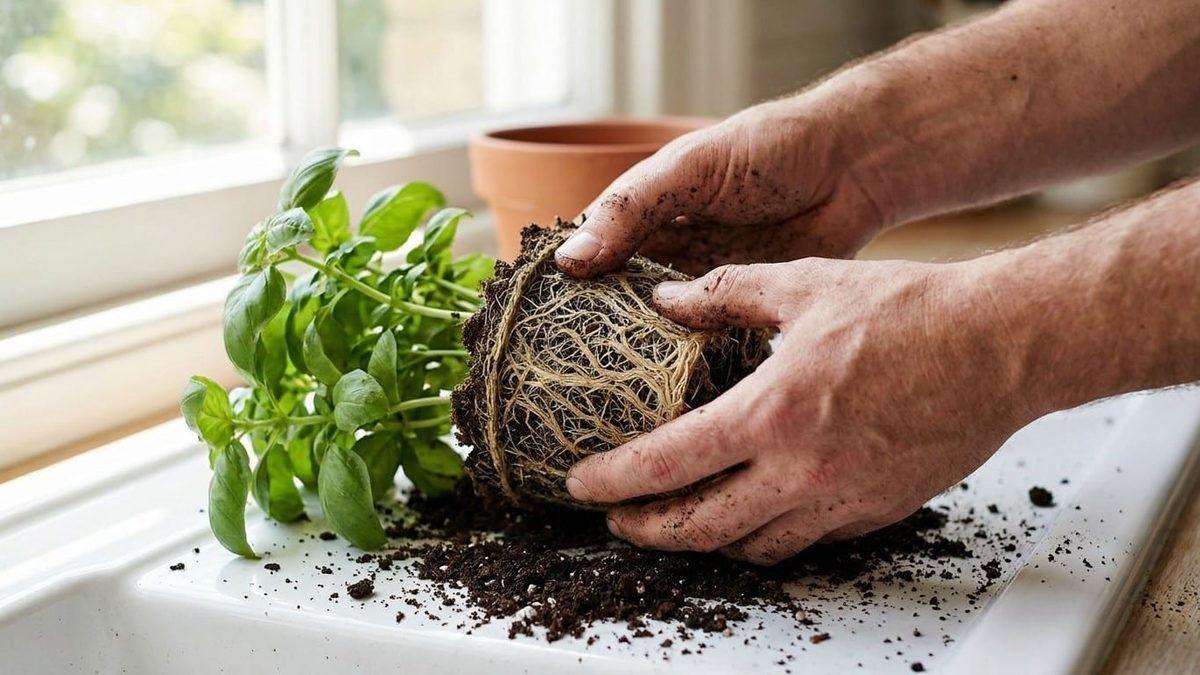
Before you untangle the roots, water the original pot generously. Watering the plant before transfer reduces stress. Use a fork to gently loosen the roots. The compressed soil plug comes apart much easier when it is wet.
This isn’t about separating every single sprig. It is about creating small clumps of five to seven stems, each with a fragment of roots.
If a stem breaks during manipulation, do not throw it away. Plunge it into a glass of water on a windowsill. It will emit roots in a few days. Once they reach two to three centimeters, you can pot it.
A €1.80 pot can thus transform into five or six distinct plants. All capable of living for weeks.
Why do we accept that the best ingredients come in the most fragile packaging? We buy the basil for the pesto. We forget that the plant itself is the first ingredient. Treat it like a wild thing, not a commodity. The kitchen window becomes a sanctuary. The summer lasts longer.
Keeping the Basil Alive: A Practical Guide
Let’s be honest. That little plastic clamshell of basil from the grocery store is usually destined for the compost bin within a week. It wilts. It turns black. It smells like regret. But if you actually take the time to divide it properly, you can stretch those two months of freshness into something much longer. Maybe even into next month.
It depends entirely on when you do it. April is magic. November is a struggle. If you divide a basil plant in late spring and keep it near a sun-drenched window, it practically behaves like a professional nursery plant. It thrives. It grows. In winter? You’re playing a different game. Most interiors lack the heat and light intensity basil craves. The results will be modest. Don’t expect a jungle on your countertop in January.
The Watering Mistake You’re Making
Here is where most people fail. They grab a pitcher and pour water directly onto the soil. It feels logical. It looks efficient. It is also the fastest way to kill your herbs.
Direct watering saturates the surface layer. This creates a damp, dark environment that invites damping-off disease. That’s the fancy term for the rot that turns leaves black and makes them drop off overnight. No warning. Just mush.
The fix is embarrassingly simple. Bottom watering.
Place the pot in a saucer filled with water. Let it sit for about fifteen minutes. The soil pulls up exactly what it needs. Then, dump the excess. It sounds trivial. It is incredibly effective. Stop drowning the roots.
Pinch to Increase Yield
Neglecting to trim your basil is a crime against flavor. Many growers just wait for the plant to get tall and leggy. Don’t.
Pinch the tips. Specifically, pinch the stems just above a leaf node. This signals the plant to produce side branches. Instead of one long, spindly stalk reaching for the ceiling, you get a bushy, ramified plant. More branches mean more leaves. More leaves mean more pesto.
Crucially, pinching delays flowering. Once basil flowers, its energy shifts from leaf production to seed reproduction. The leaves often turn bitter and small. Keep pinching, and you keep the plant in its vegetative, productive phase. The basil stays generous.
From Clamshell to Garden Bed
There is a specific satisfaction in taking a supermarket basil plant in early spring and actually acclimating it to the outdoors. If you harden it off slowly—introducing it to direct sun and wind over a week or two—you can eventually transplant the divisions into your garden.
This changes the economics of cooking entirely. You are no longer buying a disposable garnish for $1.80. You are starting a perennial-style aromatic bed. If you manage the care correctly, that single purchase can provide fresh leaves until September.
It’s not just about saving money. It’s about not wasting food. It’s about having the real thing on your table.
Where to Go From Here
The internet suggests checking letribunaldunet.fr or infobourg.fr for more regional tips. But the basics don’t change much. Keep it sunny. Water from below. Pinch the tops.
Some people treat herbs like decorations. They look at them. They don’t