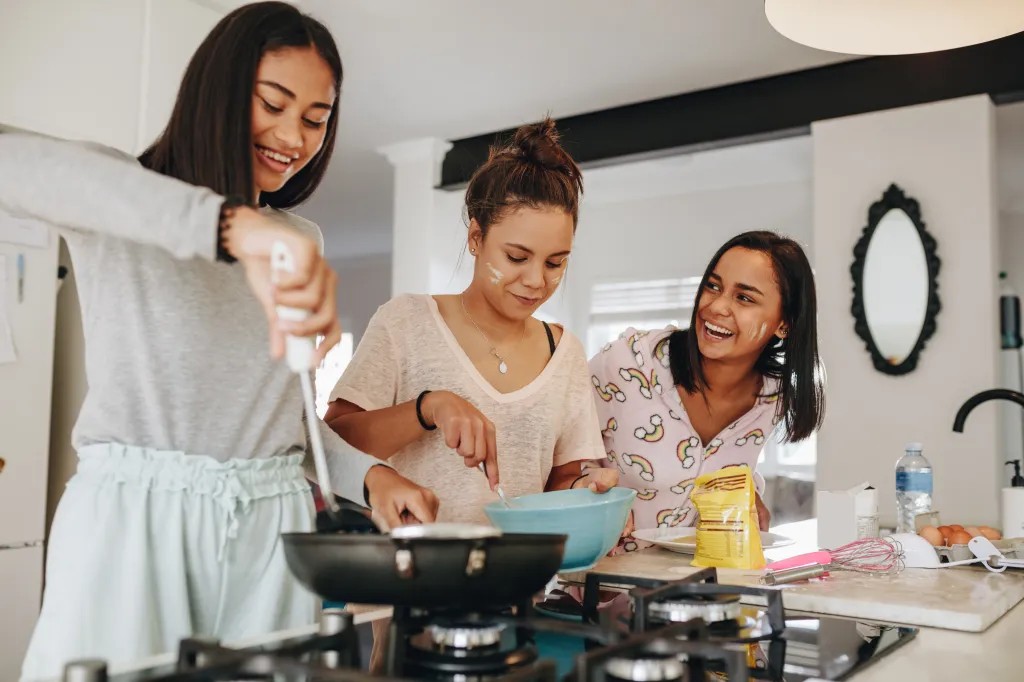
Teaching a teenager how to cook is about much more than teaching them how to follow a recipe. It is an investment in their independence, health, and financial literacy. As teens transition toward college or the workforce, the ability to move away from processed, microwave-dependent meals toward home-cooked nutrition becomes a vital life skill.
By guiding them through these 24 essential competencies, you are helping them build the confidence to nourish themselves—and potentially others—for years to come.
🛒 Logistics and Foundational Habits
Before a single flame is lit, a capable cook must understand the “business” of food.
- 1. Strategic Grocery Shopping: Beyond just picking items off a shelf, teens need to learn how to budget, plan a weekly menu, and shop for specific ingredients to avoid food waste.
- 2. Reading and Following Directions: Success in the kitchen requires patience and attention to detail. This means reading a recipe entirely before starting and clarifying steps before they begin.
- 3. Scaling Recipes: A vital skill for solo living is knowing how to cut a recipe in half for one person, or double it to create “batch cooking” opportunities for future meals.
- 4. Mise en Place: This French culinary term means “everything in its place.” Teaching teens to prep, chop, and measure all ingredients before they turn on the stove prevents chaos and burnt food.
- 5. Time Management: Learning how to time different components of a meal so they all finish simultaneously is the difference between a cohesive dinner and a cold side dish.
- 6. Storage and Freezing: Understanding how to properly store leftovers and freeze large batches of soup or lasagna is essential for long-term food security and convenience.
🔪 Safety and Kitchen Mechanics
A kitchen can be a dangerous place without proper training. Mastery of tools and safety protocols is non-negotiable.
- 7. Basic Knife Skills: Teens should learn the anatomy of a knife and how to use various cutting techniques safely under supervision.
- 8. Safety and First Aid: This includes knowing how to handle raw meat to avoid cross-contamination, how to treat minor burns or cuts, and—crucially—never using water on a grease fire.
- 9. Appliance Proficiency: They should be comfortable with everyday tools like microwaves, air fryers, and coffee makers, as well as more complex items like slow cookers or stand mixers.
- 10. Measuring and Weighing: Accuracy is key, especially in baking. They must learn the difference between liquid and dry measuring tools and the “sprinkle and scrape” method.
- 11. Kitchen Maintenance: A cook must be a cleaner. This involves “cleaning as you go,” disinfecting surfaces used for raw proteins, and knowing how to care for various appliances and dishwashers.
🍳 Culinary Fundamentals
Once the basics are mastered, teens can begin building a repertoire of actual meals.
Proteins and Grains
- 12. Cooking Meats: From ground beef for burgers to roasting, grilling, or pan-frying larger cuts, understanding different cooking methods is essential.
- 13. Eggs: A versatile and budget-friendly protein. They should master boiling, poaching, frying, scrambling, and even making an omelet.
- 14. Pasta and Grains: Learning to cook dry pasta, rice, and quinoa ensures they have a reliable base for many meals.
Produce and Sides
- 15. Vegetables and Fruit: They should move beyond steaming to learn roasting, blanching, and sautéing, while understanding textures like “fork tender.”
- 16. Salads: Moving beyond basic lettuce to understand how to build a satisfying salad with homemade croutons or varied textures.
- 17. Soups and One-Pot Meals: These are the ultimate “survival foods.” Learning to make broth-based, cream-based, or “dump” style casseroles provides easy, healthy options.
- 18. Healthy Snacking: Mastering homemade popcorn, trail mix, or granola helps them avoid the trap of highly processed snack foods.
Flavor and Baking
- 19. Dressings and Sauces: This is where cooking becomes an art. Learning to make a vinaigrette, a roux, or a simple pasta sauce teaches them about emulsions and flavor building.
- 20. Basic Baking: For those with a sweet tooth, mastering cookies, brownies, or simple cakes provides a sense of accomplishment.
- 21. Beverage Basics: Learning to make tea, coffee, or fresh juices is a simple but useful daily skill.
💡 The Most Important Lesson: Resilience
The final and most critical skill is not found in a cookbook: the ability to fail.
“Failure is a learning experience. If a dish is burnt or tasteless, research what went wrong and try again.”
Many young people are discouraged by a single culinary mistake. Teaching them that even a “failed” meal is usually still edible—and a stepping stone to better skills—is the key to long-term culinary confidence.
Conclusion: By transitioning from “short-order cook” to “mentor,” parents can equip their teens with the tools necessary for a healthy, independent, and self-sufficient adult life.