
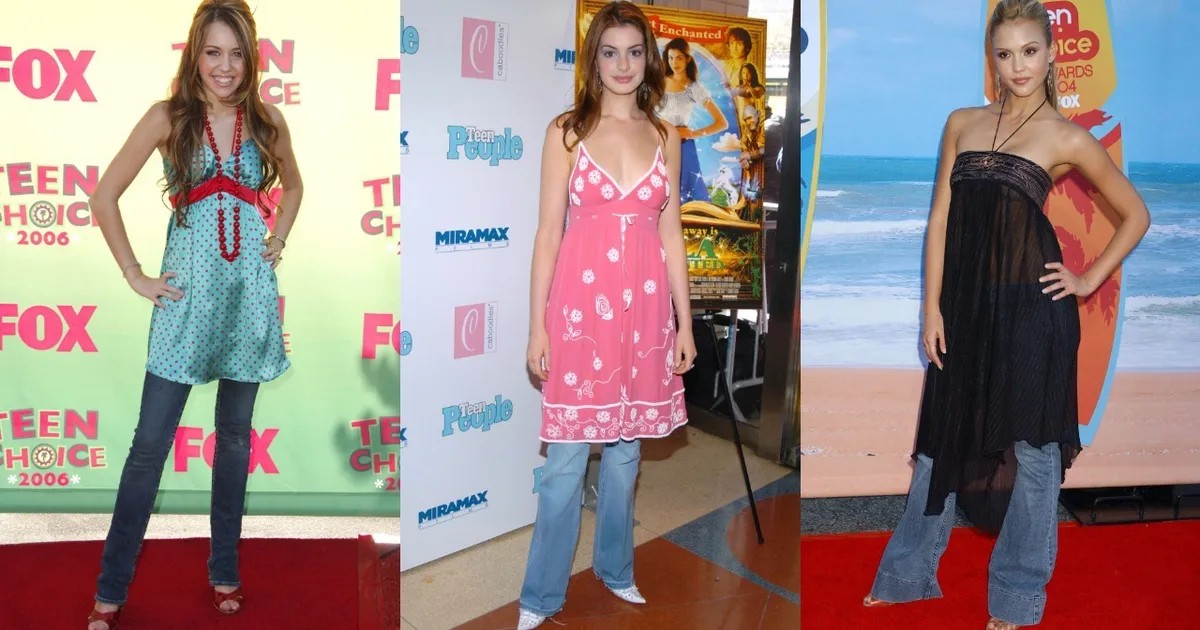
To many, the early 2000s fashion trend of wearing dresses over jeans evokes a sense of “cringe” or nostalgic amusement. It was a look defined by celebrity red carpets, colorful halters, and Juicy Couture terrycloth, often dismissed as a quirky stylistic choice of the “aughts.”
However, looking beneath the surface of this aesthetic reveals a much deeper narrative. Far from being just a fleeting trend, the pairing of dresses and pants has historically served as a tool for bodily autonomy, practical liberation, and social rebellion.
The Logic of the Early 2000s Look
For the generation that grew up in the early 2000s, the “dress-over-jeans” combo offered a specific social utility. Fashion historians note that the trend allowed for a delicate balance between being “dressy” and “casual.”
- Social Navigation: It allowed young women to wear party dresses in settings where they might otherwise be deemed inappropriate, such as school, by tempering the femininity with denim.
- Practicality and Modesty: On a functional level, the layering provided freedom of movement, removing the anxiety of “Marilyn moments” (accidental exposure) that often accompanied short skirts.
- Gender Play: The juxtaposition of hyper-feminine fabrics with rugged denim offered a subtle way to play with gender norms, aligning with the spirit of third-wave feminism.
A Radical History: The “Bloomer” Movement
While we might laugh at old photos today, the concept of wearing trousers under a dress was once considered a scandalous assault on the social order. In the mid-19th century, the Rational Dress Movement sought to liberate women from the physical dangers of Victorian fashion.
During this era, women were often confined to heavy, floor-length skirts and restrictive corsets that caused significant medical issues, including crushed organs and breathing difficulties. Activists like Amelia Jenks Bloomer and Elizabeth Cady Stanton championed a more practical alternative: calf-length dresses worn over loose-fitting “Turkish trousers” or pantaloons.
This “bloomer costume” was not merely about comfort; it was a political statement. By adopting garments that broke the strict divide between “masculine” pants and “feminine” skirts, these women challenged the very structures that regulated their lives. The backlash was intense—satirical prints of the time mocked these women, portraying a world where gender roles were reversed as a form of social chaos.
Global Precedents and Hidden Traditions
It is important to note that the idea of tunics or dresses over trousers is not a Western invention. Long before the American suffrage movement, various cultures utilized this combination for both practicality and tradition:
– Central and South Asia: The salwar kameez has long utilized this silhouette.
– Nomadic Cultures: Horse-riding cultures in Central Asia have historically utilized trousers under tunics for ease of movement.
– Historical Western Use: From the 1810s, “pantaloons” were occasionally worn under dresses, and the ensemble was common in children’s clothing and specialized settings like swimming establishments or gymnasiums.
The Next Evolution: De-gendering Fashion
As the trend resurfaces in the 2020s through runway shows and influencers, the conversation is shifting once again. While the early 2000s saw women reclaiming the right to wear pants under dresses, the modern movement is moving toward de-gendering the garments themselves.
Today, the focus is moving beyond women wearing “masculine” pants, toward a world where men and non-gender-conforming individuals feel empowered to wear skirts and dresses. From high-fashion tux gowns to the #DeGenderFashion movement, the ultimate goal is to strip these garments of their rigid gendered labels.
The history of the dress-over-pants trend shows that fashion is rarely just about aesthetics; it is a recurring battleground for personal freedom and the right to move through the world without restriction.
In summary, the trend of wearing dresses over pants has evolved from a practical necessity for physical health and political activism into a modern tool for breaking down the traditional boundaries of gendered clothing.