
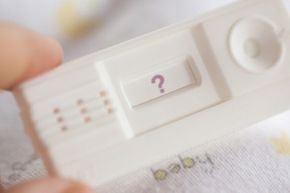
The math is simple and it can feel brutal. More than four million babies are born in the U.S. annually. You see baby showers, hear about pregnancies, and feel the pressure. Meanwhile, you are still waiting. It is not your fault. An estimated 2 million married couples in the U.S. struggle with infertility. Seven point three million women of reproductive age have used fertility services. If you have been trying for a year—or six months if you are thirty-five or older—and nothing has happened, you might be ready to look at testing.
You do not have to wait for a doctor’s appointment to start looking. Basic tests are now available for home use. They work much like the pregnancy strips you keep in your bathroom cabinet.
Understanding the female hormone cycle
Women can test for pregnancy, ovulation, and fertility at home right now. The science behind each is distinct. Pregnancy tests look for hCG (human chorionic gonadotropin) in urine. Ovulation tests measure LH (luteinizing hormone). Fertility tests are different. They measure FSH (follicle-stimulating hormone).
FSH comes from the pituitary gland. It drives the production of a fully developed egg each month. You need that egg to conceive. You need a viable egg for a healthy pregnancy. Without it, chances drop significantly.
Timing is everything with these kits. You must follow instructions closely. FSH levels change throughout the month. To get an accurate reading of how much FSH your body produces to develop quality eggs, you must test on day three of your cycle. Missing this window ruins the data.
Why FSH levels rise
Each month, your body tries to grow a mature, healthy egg. As you age, or if you have other health issues, that process gets harder. Autoimmune disorders, especially those affecting the pituitary gland, genetics, certain medications, cancer treatments, or environmental factors can disrupt this.
Your body makes a lot of eggs at birth. Roughly one to two million eggs. Most are lost over time. The number of usable eggs, known as your ovarian reserve, shrinks as you age. When this happens, your pituitary gland pumps out more FSH. It is trying harder to coax an egg into maturity.
High FSH results on an at-home test indicate some level of fertility impairment. They do not tell you the cause. They just tell you that your body is working overtime. If your results are high, talk to a doctor or fertility specialist for further testing.
Male fertility is part of the picture
Infertility does not discriminate by gender. At least twenty to thirty percent of couples who struggle to conceive do so because of a male fertility problem. You cannot solve half the equation without looking at the other half.
Men are now able to test their fertility at home too. A key factor here is sperm quality. Sperm needs good mobility. It needs good motility. It needs a healthy supply. No two-headed sperm allowed.
Traditionally, men had to leave a sample at a clinic. Often, the sample had to be delivered quickly. It was uncomfortable. It was awkward. Now, there is an option that removes the pressure.
The University of Virginia breakthrough
Researchers at the University of Virginia in Charlottesville developed an at-home test kit. It checks one specific part of a standard semen analysis: sperm count. You might wonder why only count matters. After all, shape and speed are important too. But problems with sperm count are responsible for an estimated eighty-nine percent of sperm-related infertility issues. It is a logical starting point.
The test requires only the kit and a fresh semen sample. The strips detect an antigen called SP-10. This antigen is found on the head of sperm cells. The results are straightforward.
- More than 20 million sperm per milliliter means normal fertility.
- Between 2 million and 20 million suggests impaired fertility.
- Less than 2 million indicates infertility.
Is it worth the cost and effort?
For couples who have been trying for a few months but are not ready for invasive testing, at-home FSH testing might be useful. It can help spot potential problems early. The tests are more than ninety-five percent accurate. They cost less than in-office testing.
These kits are not a diagnosis. They are a first step. They help you understand your fertility. They help you decide if you need expert advice and planning.
Eighty-five percent of couples get pregnant within one year of trying. If it has only been a few months, do not assume the worst. The odds are with you. But if you have been trying longer than that, knowledge is power. You can take control of the conversation with your doctor before you even walk into the office.